
Focaccia with Cheese from Recco
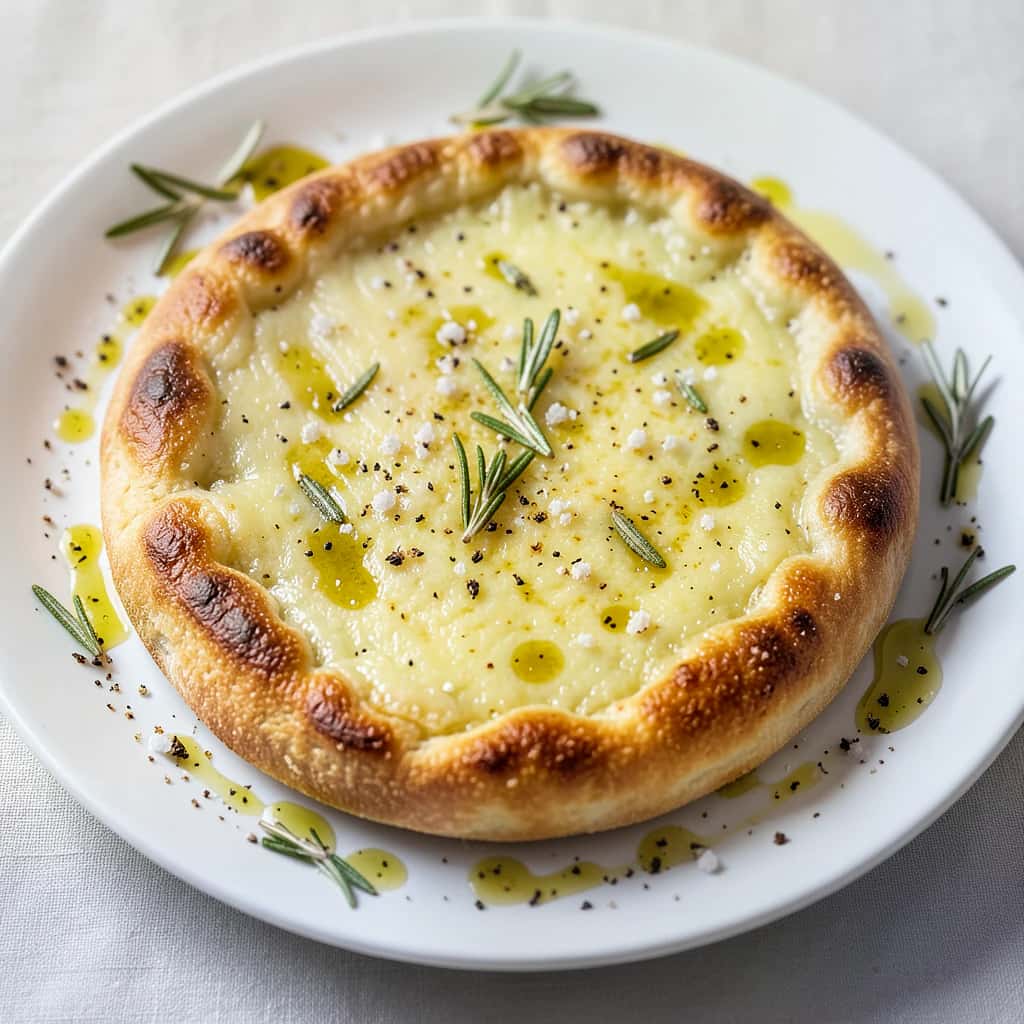
Paper-thin Ligurian focaccia made without yeast, filled with creamy crescenza and baked crisp in two trays at very high heat.
Unlike airy focaccia, this Ligurian specialty has no yeast: two almost transparent sheets of olive-oil dough enclose soft crescenza and bake rapidly at very high heat.

Instructions
- 1
Put the Manitoba flour, room-temperature water and salt in a food processor fitted with a dough hook. Add the 40 g olive oil and mix on low for 4–5 minutes, scraping down the bowl if needed. Increase the speed moderately and mix for another 4–5 minutes, until smooth and homogeneous.
10 min
- 2
Transfer the dough to a lightly floured work surface, flatten it and fold the edges inward alternately. Cover with plastic wrap, a bowl or a clean towel and rest at room temperature for 20 minutes.
20 min
- 3
Divide the dough into four portions: two 350 g pieces for the bases and two 300 g pieces for the tops. Shape each into a tight ball and pinch the seam closed underneath.
- 4
Set the balls seam-side down on a tray, space them apart, cover and refrigerate for 1 hour. Bring them back to room temperature for 10 minutes before rolling.
1 hr 10 min
- 5
Keep three balls covered. Roll one 350 g ball into an even rectangle larger than a 30×40 cm baking tray and about 1 mm thick. Hold it to the light to find and roll any thicker areas; pause if it starts shrinking.
- 6
Brush a baking tray with 10 g of the remaining oil. Drape the base sheet into the tray with dough overhanging every edge. Dot 400 g crescenza over it in alternating rows of three and two, leaving a few centimeters between the mounds, then add a few drops of oil.
- 7
Roll one 300 g ball larger than the tray and even thinner than the base, like a veil. Lift it on the backs of your hands without tearing and lay it over the cheese with the edges overhanging.
- 8
Press the two sheets together around the edge. Pinch about three vent holes per row through the top sheet, preferably over the cheese. Brush lightly with oil or, for a home oven, with a thin brine of water, salt and oil.
- 9
Run the rolling pin over the tray edges to cut away excess dough, then press the rim again to seal. Bake in a static oven preheated to 480°F for 7–8 minutes, until crisp and browned in spots.
8 min
- 10
While the first focaccia bakes, assemble the second with the remaining 350 g base, 300 g top, 400 g cheese and oil. Bake it for 7–8 minutes, then cut both focaccias into squares and serve hot.
8 min
Ago's Notes
- This unleavened dough depends on strong Manitoba flour rated W 360–380; weaker flour may tear as the sheets are stretched paper-thin.
- If the dough contracts while rolling, cover it and wait a few minutes before continuing. The full 20-minute room-temperature rest, 1-hour refrigeration and 10-minute warm-up make stretching easier.
- Prescinseua is traditional but difficult to find; crescenza is the source recipe's practical substitute.
- For a home oven, the source recommends brushing the top with a light brine of water, a pinch of salt and a little oil rather than oil alone.
- Bake one tray at a time in a fully preheated static oven and watch closely: at 480°F the thin sheets brown quickly. Serve hot while the cheese is fluid.
Cut each focaccia into squares as soon as it leaves the oven so the crisp, veil-thin layers contrast with the molten crescenza.


How much of a capolavoro is this?
Share your opinion. Ago will say it the Italian way.
Pick a hand and tell Ago what you think.
Related Recipes
Ciabatta - A Simple Yet Flavorful Bread
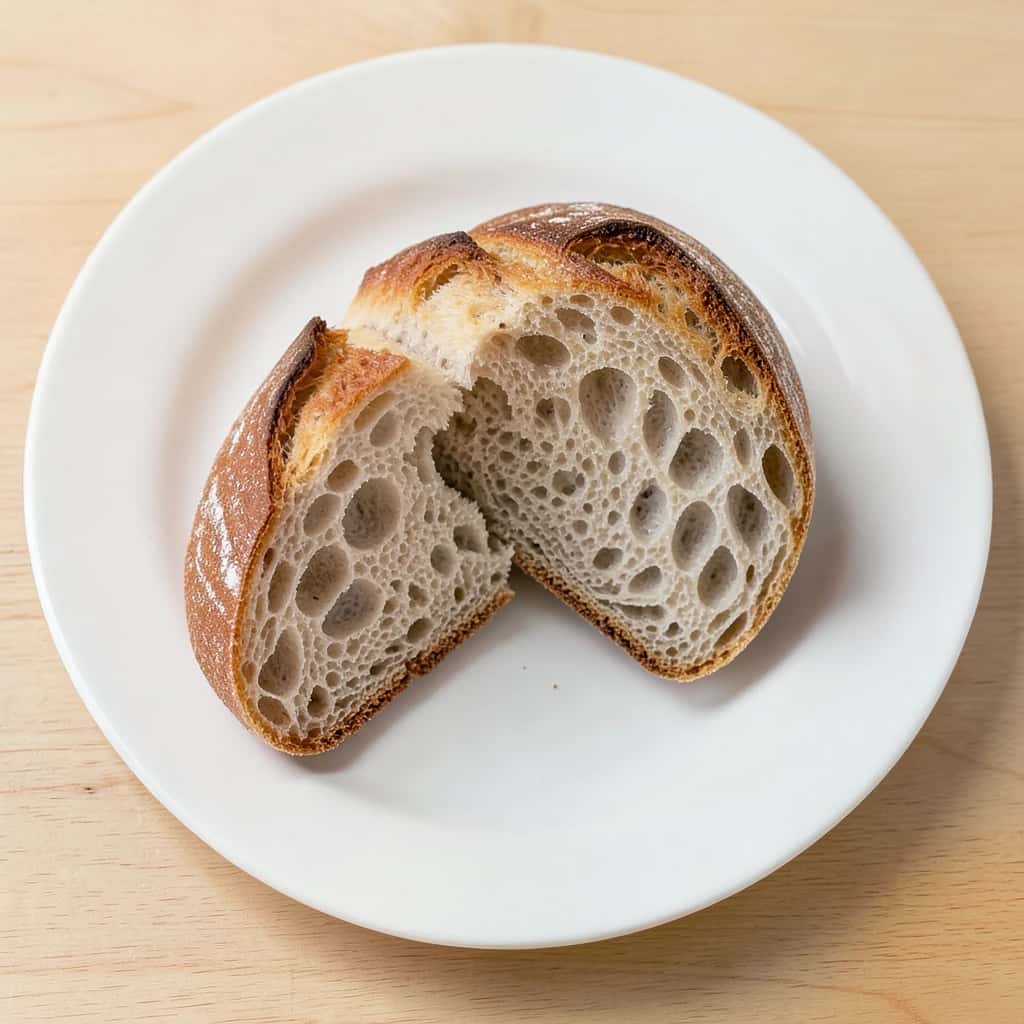
A light yet flavorful bread from Veneto, ciabatta develops a unique texture through its highly hydrated dough.
Fried Panzerotti
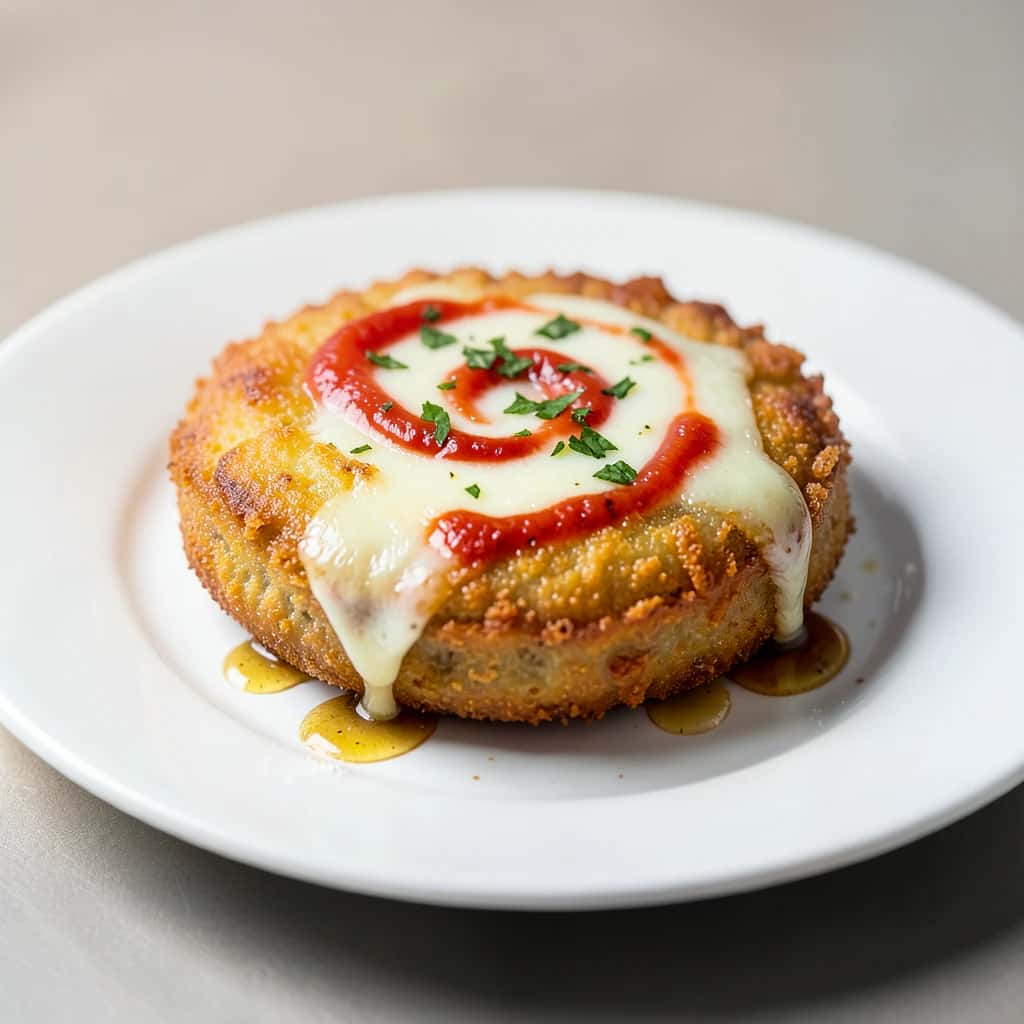
Golden Apulian turnovers with crisp fried dough and a hot, stretchy filling of mozzarella, tomato purée and oregano.
Schiacciata
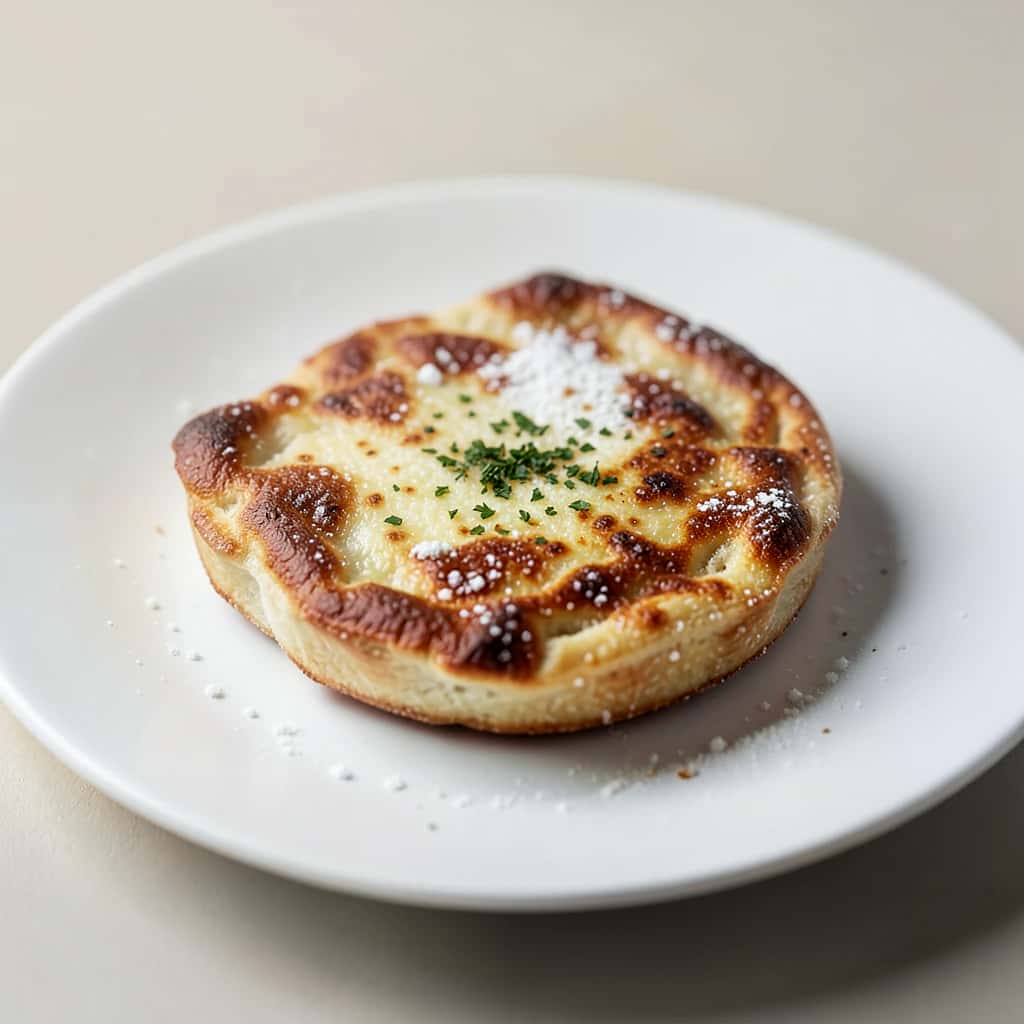
The Tuscan oil-infused schiacciata is a typical street food focaccia, but now you can recreate it at home!