
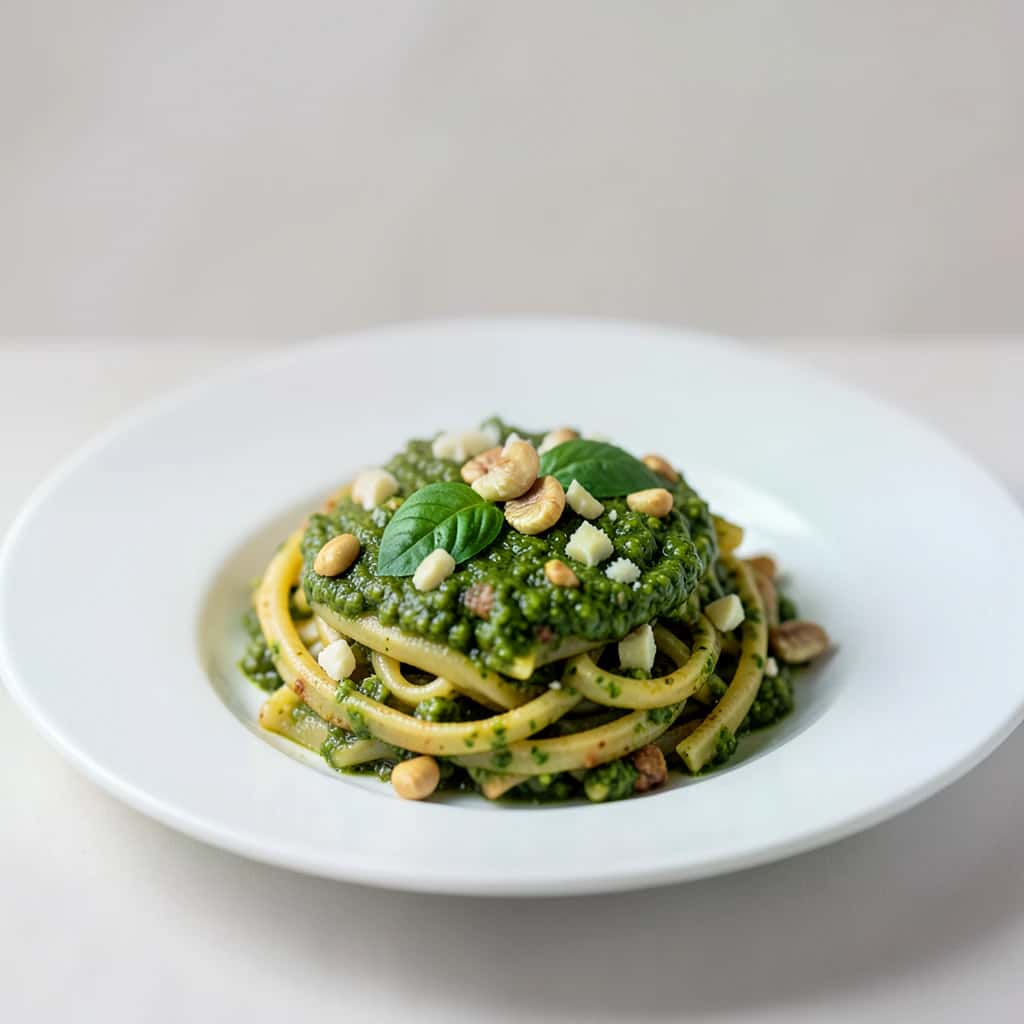
Genovese Pesto
Traditional Ligurian pesto made in a marble mortar with Genovese basil, pine nuts, garlic, aged Parmigiano, Pecorino and delicate extra-virgin olive oil.
Traditional pesto gets its bright aroma and gently textured creaminess from cool, careful mortar work rather than heat. Garlic and pine nuts form the base, basil is ground with coarse salt, the two aged cheeses add depth, and delicate olive oil is incorporated only at the end.

Instructions
- 1
Remove the basil leaves from the stems and place them in a colander. Rinse them very briefly under cold running water.
- 2
Transfer the leaves to a clean kitchen towel and dry them gently but thoroughly, paying particular attention to the concave area where water collects.
- 3
Place the halved garlic cloves, with their germs removed, in a marble mortar. Pound with a wooden pestle until creamy.
- 4
Add the pine nuts and pound them into the garlic until they form a smooth paste.
- 5
Add the dry basil leaves and coarse salt. Begin with light pounding motions, then use rotating movements, scraping the mixture from the inner walls so it becomes evenly creamy.
- 6
Add the Pecorino pieces and pound until incorporated, then add the aged Parmigiano and work it in the same way.
- 7
When everything forms a uniform cream, pour in the olive oil and rotate the pestle for only a few more moments. Use the pesto without heating it.
Ago's Notes
- Use small, concave Genovese DOP basil leaves and dry them completely after rinsing; excess water encourages oxidation and darkening.
- Coarse sea salt helps grind the basil and should not be replaced with fine salt for the traditional mortar method.
- If a mortar is unavailable, pulse a mixer briefly to avoid heating the basil, and always add the oil at the end.
- Use immediately or refrigerate in a jar covered with a layer of oil for up to 4 days. Alternatively, freeze the pesto in small jars.
Never heat Genovese pesto; when dressing pasta, loosen it only with a little pasta cooking water for a creamy texture.


How much of a capolavoro is this?
Share your opinion. Ago will say it the Italian way.
Pick a hand and tell Ago what you think.
Related Recipes
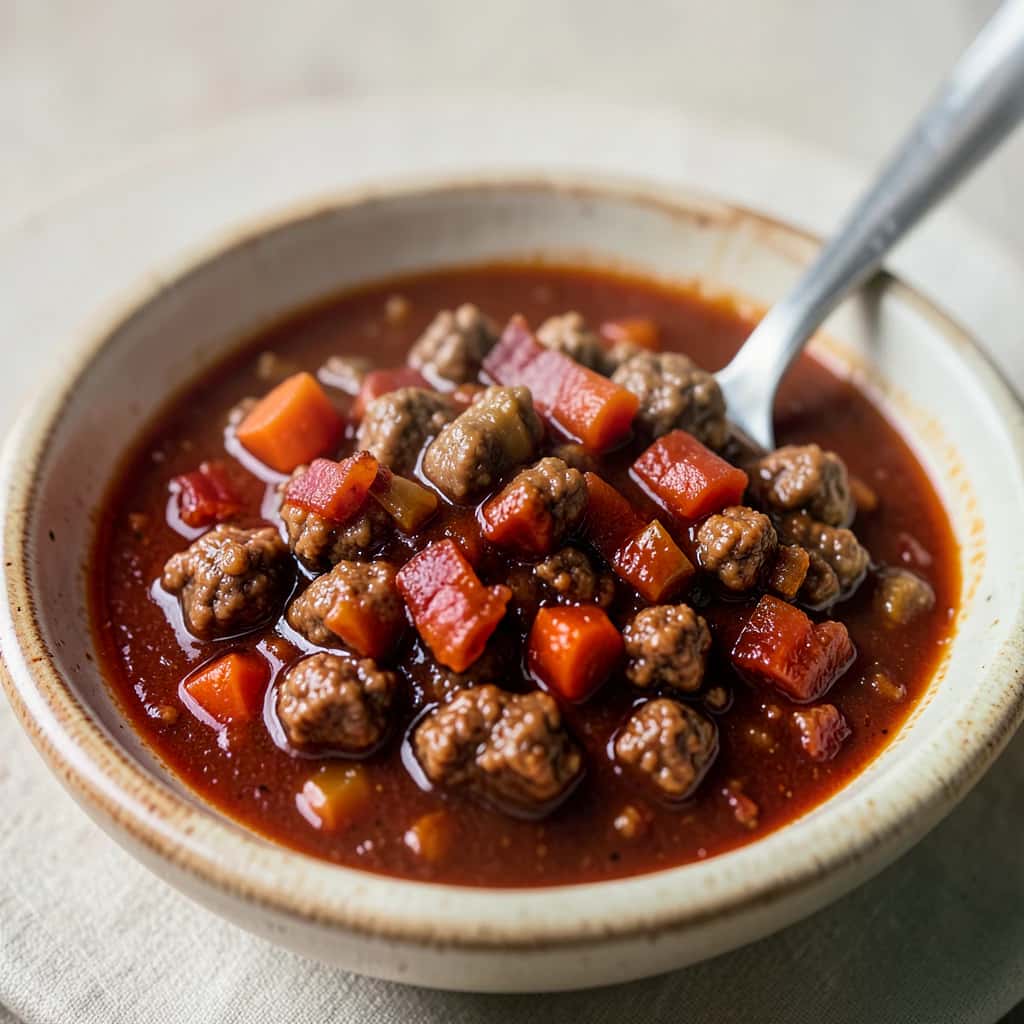
Bolognese Sauce
Authentic Ragù alla Bolognese made with ground beef, fresh pancetta, fine soffritto, tomato, red wine and broth, slowly simmered until thick and creamy.
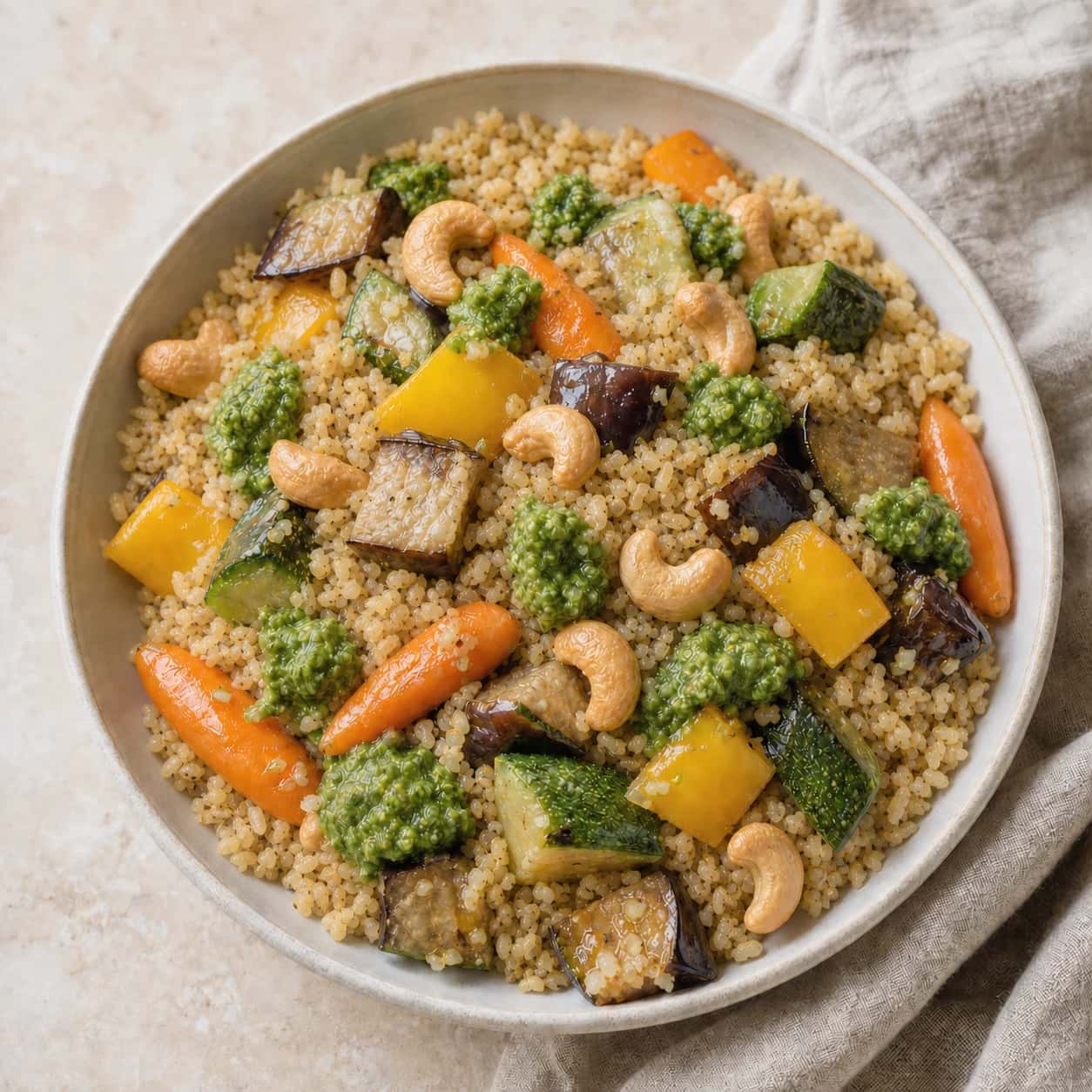
Cashew Tabbouleh with Stewed Vegetables
Bulgur and tender summer vegetables finished with whole cashews and a creamy basil-cashew Parmesan pesto.
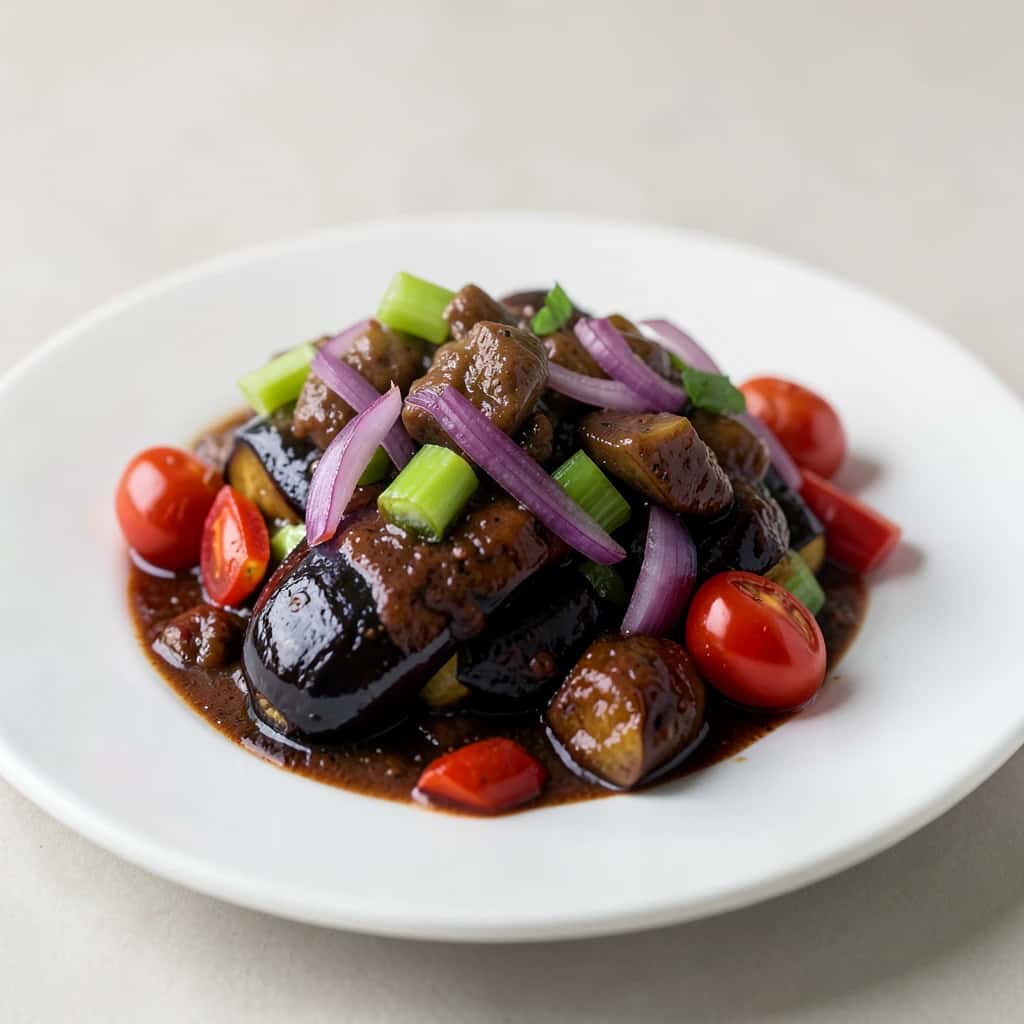
Eggplant Caponata with Cocoa Sauce
A Sicilian sweet-and-sour side dish with eggplant, bell pepper, olives, capers and a bitter cocoa sauce.